


Today my guest, Jane of the Heritage Cook, is sharing her Holiday Prime Rib Roast with Gravy made from the pan drippings, along with several sauce recipes and a Yorkshire pudding. Prime rib is made for holiday family dinners. It's not only delicious, it's gorgeous on the table!
I am happy to present you with one of my favorite holiday meals, Prime Rib! Every year my father-in-law roasts a large beef rib roast for the family Christmas dinner. When we walk in the house we are instantly enveloped with the mouth-watering aromas of roasting beef. Yum!
Quick Summary
- A bone-in rib roast that serves 14, plus what to ask your butcher for.
- How to turn the drippings into gravy right in the roasting pan.
- Cooking times by the pound, with pull temperatures for rare, medium rare, and medium.
- Two horseradish sauces, a blender Bearnaise, and Yorkshire pudding to serve alongside.

Key Ingredients
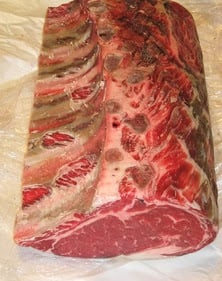
Prime rib roast (bone-in): Plan on one rib for every 2 people, and leave the fat on, because that's where the flavor is.
Pan drippings, red wine, and beef broth: These three make the pan gravy.
Seasoning your Holiday Prime Rib Roast
When I think of serving a special occasion meal, in particular, one during the holidays, Prime Rib with Gravy is at the top of my list. It is elegant and doesn't require a lot of work or last minute preparations.
A standing rib roast may seem hard to make, but it is probably the easiest of all the party entrees to make. It can be as simple as seasoning the roast with salt and pepper or you can go all out and make a complicated rub and crust. I like something in between, with all the flavor but not all the work. There is no need for a rack to roast because you stand the beef on the ribs raising it off the pan and allowing the heat to reach all sides at the same time.
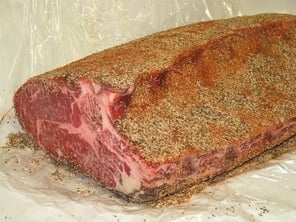
Tips for Buying and Cooking Prime Rib Roast
- When you buy the roast, have your butcher cut the bones off and tie them back on. This is called "cradling." It gives you the flavor of roasting the meat on the bone without the hassle when you go to carve it. Just don't forget to remove the strings before you serve it.
- The trick a roast that's done just right is to cook them below your desired final temperature and let the residual or carry-over heat finish cooking it. While resting, the juices have a chance to be redistributed throughout the roast, keeping it juicy. Transfer it from the roasting pan to your cutting board and cover loosely with foil. And don't worry about it cooling off - it will easily stay warm for the resting time.
Prime Rib Roast Cooking Times and Temperatures
- Start at 500°F, or as hot as your oven goes, for 15 minutes. Then drop the heat to 325°F.
- For rare, allow about 13 to 15 minutes per pound and pull the roast at 115°F to 120°F.
- For medium rare, figure about 15 to 17 minutes per pound and pull it at 120°F to 125°F.
- For medium, take it out at 125°F to 130°F.
How to Make Prime Rib Gravy from Pan Drippings
Once the roast comes out to rest, skim off all but 3 tablespoons of the clear fat. Leave the dark browned bits and juices in the pan.
Set the roasting pan over two burners on medium heat and deglaze with red wine or a splash of beef stock, scraping up the caramelized bits. Whisk in the flour and cook it for a minute or two until it turns light golden. Then slowly pour in the warm beef broth, whisking the whole time so it doesn't lump. Simmer for a few minutes until it coats the back of a spoon, season with salt and pepper, and strain it if you like it smooth.
Yorkshire Pudding - a classic English Side Dish
Yorkshire pudding is a cross between a baked roll and custard with a crunchy exterior and creamy interior. Cooked in the drippings from the roast, it is a savory pastry designed to absorb the juices from the plate, so place it next to the beef for maximum flavor. Often made in individual portions, I like Tyler Florence's version cooked like a Dutch Baby (large pancake).
Sauces for your Prime Rib Roast
Horseradish sauce is one of the traditional accompaniments for roasted beef. The pungent, spicy flavor is addicting and helps cut some of the richness of the beef. Horseradish is a member of the mustard family and the version we are all accustomed to seeing is made from the thick, white root. The longer it sits in the refrigerator, the milder it gets, so for the fullest flavor, buy a new jar before the holidays.
I have included two recipes for slightly different versions of a horseradish sauce. The first is made with whipping cream and the second with sour cream. Make the one that suits your personal tastes. If you like sour cream on your baked potatoes, try this version - it will wake up your taste buds!
Bearnaise sauce, a variation on Hollandaise that is artery-clogging but oh so good. It is hollandaise with shallots and tarragon. It was my father's favorite sauce with beef and the one he always requested for his birthday. Today's recipe utilizes a blender, which makes this a snap to make. Definitely, worth the effort, this sauce is likely to become one of your favorites, just like my dad.
How to Reheat Prime Rib
Leftovers reheat nicely in the oven or a skillet. You'll find the method and times in the recipe card notes.

You May Be Wondering
Use one that can go over two burners on the stovetop, since that's where you'll make the gravy.
The sour cream horseradish sauce keeps in the refrigerator for up to 2 days. The Bearnaise is best made at the last minute, but you can keep it warm in a double boiler.
Save them for making stock for soup.
More Holiday Recipes
Holidays call for special meals and special sides, below are some of my favorites to serve for Christmas dinner from veggie sides to decadent desserts!
When you make this prime rib with gravy recipe, please leave a ⭐⭐⭐⭐⭐ rating and comment below to let me know what you think. I'd love it if you tag me on Instagram @grumpyshoneybunch so I can see your photos!
📖 Recipe
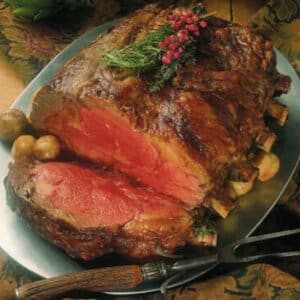
Holiday Prime Rib Roast with Gravy
Equipment
As an Amazon Associate I earn from qualifying purchases.
Ingredients
For the Roast
- 7 pound prime rib estimate serving 2 people per rib, bones cut away from the roast and tied back to the roast with kitchen string
Simple Dry Rub
- ½ cup sweet paprika
- 3 tablespoons kosher salt
- 2 tablespoons freshly ground black pepper
- 3 tablespoons packed brown sugar
- 3 tablespoons dry thyme leaves
Yorkshire Pudding
- 4 cups all-purpose flour
- ½ teaspoon salt
- 3 large eggs
- ¾ cup milk
- ½ cup pan drippings from the roast prime rib of beef
Horseradish Cream Sauce
- 2 cups chilled heavy cream
- 2 tablespoons prepared white horseradish
- 3 tablespoons freshly squeezed lemon juice
- salt and freshly ground black pepper to taste
- freshly minced chives
Sour Cream Horseradish Sauce
- 2 cups sour cream
- 2 tablespoons freshly squeezed lemon juice
- 1 teaspoon salt
Bearnaise Sauce Recipe
- 2 tablespoons shallots minced
- 1 tablespoon tarragon vinegar
- ½ cup white wine
- 5 large egg yolks
- 1½ teaspoons tarragon
- 3 peppercorns
- Salt
- ½ teaspoon dry mustard
- ¾ cup butter melted
- Pinch cayenne pepper
- Squeeze of lemon juice optional
Pan Gravy
- 2 tablespoons pan drippings reserved from the prime rib roasting pan
- 3 tablespoons all-purpose flour
- 2 cups beef broth , warmed
- 2 tablespoons red wine , for deglazing
- salt and pepper , to taste
Instructions
Dry Rub
- Combine all ingredients in a medium bowl until evenly distributed. Store in a tightly sealed container at room temperature.
For the Roast
- Remove roast from the refrigerator, loosely wrapped, 3 hours before cooking. Roasts should always be brought close to room temperature first, before they go in the oven. (This helps them cook more evenly.)
- Cookbooks often call for the excess fat to be removed. By "excess" fat they mean any fat more than an inch thick. The fat is what provides the flavor and what you are paying for with prime rib, so you want to leave it on. Your butcher should have removed any excess fat.
- If your butcher hasn't already done so, cut the bones away from the roast and tie them back on to the roast with kitchen string. This will make it much easier to carve the roast, while still allowing you to stand the roast on the rib bones while cooking.
- Preheat your oven to 500°F, or the highest it will go (our oven only goes up to 450°F). Generously sprinkle salt and pepper all over the roast. Alternately, you can replace the salt and pepper with a dry rub (such as the one above) of your choice.
- Insert a meat thermometer into the thickest part of the roast, making sure it doesn't touch a bone. (Some meat thermometers require that you poke a hole first with a skewer, and then insert the thermometer.) Place the roast, fat side up, rib side down in a roasting pan in the oven.
- After 15 minutes on 500°F, reduce the heat to 325°F. To figure out the total cooking time, allow about 13 to 15 minutes per pound for rare and 15 to 17 minutes per pound for medium rare. The actual cooking time will depend on the shape of the roast and your particular oven. A flatter roast will cook more quickly than a thicker one. So make sure to use a meat thermometer. This is not a roast to "wing it". Err on the rare side.
- Roast in oven until thermometer registers 115°F to 120°F for rare, 120°F to 125°F for medium rare, or 125°F to 130°F for medium.
- Check the temperature of the roast using a meat thermometer a half hour before you expect the roast to be done. For example, with a 10 pound roast, you would expect 2-½ hours of total cooking time (15 minutes at 500°F and 2-¼ hours at 325°F). In this case, check after 2 hours of total cooking time, or 1-¾ hours after you lowered the oven temp to 325°F.
- Once the roast has reached the desired internal temperature, remove it from oven and let rest 15 minutes, covered with aluminum foil, before carving. The roast will continue to cook while it is resting.
- With a knife or scissors, cut the strings, which attach the meat to the bones. Remove the bones (save for making stock for soup). Then, using a sharp carving knife, slice meat across the grain for serving, making the slices about ¼ to ½ inch thick.
For the Yorkshire Pudding
- Preheat the oven to 450°F.
- Sift together the flour and salt in a bowl. In another bowl, beat together the eggs and milk until light and foamy. Stir in the dry ingredients just until incorporated.
- Pour the drippings into a 9-inch pie pan, cast iron skillet, or square baking dish. Put the pan in oven and get the drippings smoking hot. Carefully take the pan out of the oven and pour in the batter. Put the pan back in oven and cook until puffed and dry, 15 to 20 minutes.
For the Horseradish Cream Sauce
- Beat the heavy cream until stiff. Slowly add the horseradish and lemon juice and continue to beat together. Taste and adjust seasoning if needed. Garnish top with chives. Serve with roasted beef.
For the Sour Cream Horseradish Sauce
- In a medium bowl, combine all the ingredients and whisk until smooth. Taste and adjust seasonings. Cover and refrigerate until ready to use. Will hold in the refrigerator up to 2 days.
For the Bearnaise Sauce
- Simmer the shallots in vinegar and white wine until liquid has been reduced by about two-thirds. Remove from heat and cool.
- Place this mixture in blender and add egg yolks, tarragon, peppercorns, salt, and dry mustard. Blend at high speed for no more than 10 seconds.
- Add the warm melted butter, cayenne, and a squeeze of lemon juice (optional). Quickly turn on blender again and let it rotate until sauce thickens. Should it become too thick, add a bit of hot water and blend again.
- This sauce should be made at the last minute so that it will be warm when served (but it may be kept warm in a double boiler).
To make the pan gravy
- After removing the roast to rest, skim all but 3 tablespoons of clear fat from the roasting pan, keeping the dark browned bits and juices.
- Place the roasting pan over two burners on medium heat. Pour in the red wine or a splash of beef stock, scraping up all the caramelized bits stuck to the bottom with a wooden spoon.
- Sprinkle 3 tablespoons of flour into the warm fat and drippings. Whisk continuously for 1 to 2 minutes, until the flour cooks out and turns light golden brown.
- Slowly pour in 2 cups of warm beef broth, whisking constantly to prevent lumps.
- Bring the gravy to a gentle simmer. Cook for 3 to 5 minutes until it thickens enough to coat the back of a spoon. Season with salt and pepper to taste, strain if desired, and serve hot.


Rachel says
I just wanted to let you know that the Presto Pasta Nights #244 roundup is now posted. Thanks for joining in the fun this week.